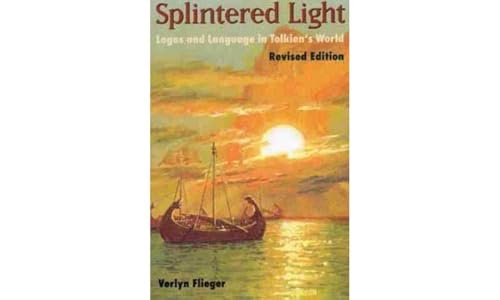
Splintered light : logos and language in Tolkien's world
Publication details: Kent, Ohio : Kent State University Press, 2002.Edition: 2nd edDescription: xxii, 196 p. ; 23 cmISBN:- 9780873387446 (pbk. : alk. paper)
- Tolkien, J. R. R
- Tolkien, J. R. R
- Christianity and literature -- History -- 20th century. -- England
- Fantasy fiction, English -- History and criticism
- Light and darkness in literature
- Middle Earth (Imaginary place)
- Language
- Semantics, discourse analysis, stylistics
- Literary studies: c 1900 to c 2000
- Literary studies: fiction, novelists & prose writers
- English
- Literature: history & criticism
- Science fiction
- Fantasy
- United Kingdom, Great Britain
- Ireland
- 823.912
| Cover image | Item type | Current library | Home library | Collection | Shelving location | Call number | Materials specified | Vol info | URL | Copy number | Status | Notes | Date due | Barcode | Item reservations | Item reservation queue priority | Course reserves | |
|---|---|---|---|---|---|---|---|---|---|---|---|---|---|---|---|---|---|---|
|
|
George Adams Research Centre | Main | 823.912 FLI (Browse shelf(Opens below)) | Available | RM000121 | |||||||||||||
|
|
George Adams Research Centre | Main | 823.912 FLI (Browse shelf(Opens below)) | Available | RM000122 |
Includes bibliographical references (p. 183-184) and index.
Verlyn Flieger's expanded and updated edition of "Splintered Light", a study of Tolkien's fiction first published in 1983, examines "The Silmarillion" and "The Lord of the Rings" in light of Owen Barfield's linguistic theory of the fragmentation of meaning. J. R. R. Tolkien is perhaps best known for The Hobbit and The Lord of the Rings, but it is in The Silmarillion that the true depth of Tolkien's Middle-earth can be understood. The Silmarillion was written before, during, and after Tolkien wrote The Hobbit and The Lord of the Rings. A collection of stories, it provides information alluded to in Tolkien's better known works and, in doing so, turns The Lord of the Rings into much more than a sequel to The Hobbit, making it instead a continuation of the mythology of Middle-earth. Verlyn Flieger's expanded and updated edition of Splintered Light, a classic study of Tolkien's fiction first published in 1983, examines The Silmarillion and The Lord of the Rings in light of Owen Barfield's linguistic theory of the fragmentation of meaning. Flieger demonstrates Tolkien's use of Barfield's concept throughout the fiction, showing how his central image of primary light splintered and refracted acts as a metaphor for the languages, peoples, and history of Middle-earth.
There are no comments on this title.