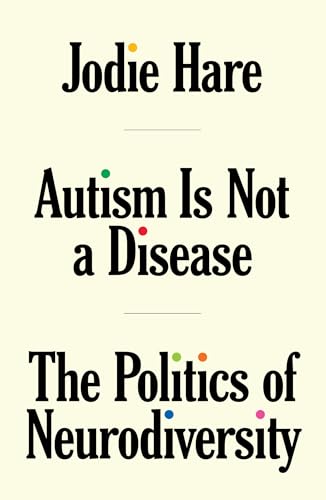
Autism is not a disease : the politics of neurodiversity
Publication details: London : Verso UK, 2024.Description: 1 online resourceContent type:- 9781804291535
- 9781804291542
- 9781804291559
| Cover image | Item type | Current library | Home library | Collection | Shelving location | Call number | Materials specified | Vol info | URL | Copy number | Status | Notes | Date due | Barcode | Item reservations | Item reservation queue priority | Course reserves | |
|---|---|---|---|---|---|---|---|---|---|---|---|---|---|---|---|---|---|---|
|
|
Online Resource | EBook - click link in record to access | Available online |
Neurodiversity is one of the most urgent political issues of our time. As the number of diagnoses of autism, ADHD, and other types of neurodivergence rises, we are starting to understand that there is no such thing as a brain. But society is still organised around neuronormativity, and autism is treated as a disease.Jodie Hare, diagnosed with autism at twenty-three, argues it is time to redefine the politics of who we are. She calls for the recognition of diversity as part of natural variation, rather than a departure from sameness. This will have an impact on the places where we learn, work, and socialise - and Hare shows how these can be adapted to be more inclusive and accessible. She shows how we might commit to building a world where we can all thrive, one that works to combat discrimination based on race, class, gender, and disability.
Funded by: Knowledge Unlatched
Creative Commons Licence
There are no comments on this title.